Seeking an effective way to enhance the shape of your nostrils and overall facial harmony? Our clinic provides advanced Alarplasty in Dubai, performed by our expert surgeon, Dr. Ahmed Naji Attiyah, with more than 11 years of experience. The Nostril reduction surgery treatment helps patients reshape the nasal bridge and improve facial symmetry with permanent results.
FAST FACTS:
Cost: 6,999 AED – 14,999 AED
Type: Surgical Procedure
Duration: 1 to 2 Hours
Longevity: Permanent
What is Alarplasty | Alar Base Reduction?
Alarplasty is a cosmetic plastic nose surgery for patients who want to reshape or reduce the size of the nostrils and create balanced facial symmetry. The Alar base procedure helps reduce the size and width of the nasal passage by removing a small amount of tissue from the area around the nostril. The main aim of the surgery is to reduce the size of the nostril, not the entire shape of the nose.
Causes of Wide or Flared Nostrils
The main causes of wide or flared nostrils that most patients seek to address are:
Can be Combined alarplasty and rhinoplasty for enhanced results.
Side Effects and Safety Precautions
There are minimal Alarplasty risks, such as.
Redness: Apply cooling gel or cold compression.
Swelling: Keep the treated area cool to reduce the Alarplasty swelling timeline.
Numbness: Take prescribed medication and apply cream as suggested.
Scab Formation: Apply ointment and don’t scratch or peel.
Infection: Maintain the treated area clean and dry.
Types of Alarplasty
Alarplasty is performed through several methods to make sure that each of the patient can get their desired results according to their needs.
Types
Complexity
Weir Excision (Alar wedge resection)
Moderate
Nasal Sill Excision
Moderate
Combined Technique (Unified Approach)
High
V-Y Shaped Incision
Moderate to High
Conditions for Getting an Alarplasty Surgery
The conditions for patients getting an alarplasty are.
Having wide nostrils that affect the facial expression.
Excessive nostril flares while smiling.
Suffering from an asymmetrical appearance.
Wanting a more enhanced and refined nasal shape.
Ideal for those who want to go through minimal invasive procedure.
Should not have any active infection or ongoing procedure.
Meet Our Board-Certified Surgeon
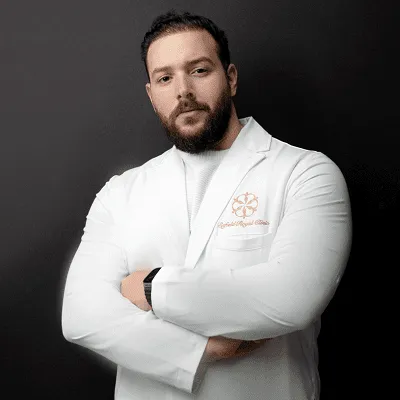
Dr. Ahmed Naji Attiyah is a Board certified facial plastic surgeon with 11+ years of professional experience, with expertise in rhinoplasty and aesthetic nose surgery. His experience in nasal reshaping makes him well-suited for Alarplasty in Dubai. His surgical approach considers the patient’s nasal structure and facial proportions to achieve a refined appearance while maintaining natural-looking results. Dr. Ahmed ensures each patient receives expert care throughout the entire surgery process.
Fellow of the American College of Surgeons (FACS).
Fellow of the Iraqi Board of Plastic Surgery (FIBMS).
Member of ISAPS & ASPS.
Cleveland Clinic, USA.
Understand Alarplasty Process
From consultation to post-care instructions, understand the alarplasty process in detail to ensure all concerns are resolved and the patient can achieve their desired results.
The consultation for alarplasty surgery is important for both the patient and the surgeon to properly understand the patient’s concerns and determine the ideal treatment plan. During the consultation, Dr. Ahmed Naji will understand the patient’s concerns, examine the area that needs to be treated, and then suggest the ideal treatment technique to the patient. The patient can also get their concerns addressed about cost, results, treatment technique, and recovery.
The detailed procedure steps for alarplasty are discussed below.
Cleansing
The treatment area is cleaned properly to remove dust, impurities, and bacteria from the skin to prevent bacterial infection.
Marking
After cleansing, the area that has to be treated is marked properly to make sure that the whole incision and tissue removal step is performed precisely.
Anesthesia
An anesthetist will administer local anesthesia to the nose and the surrounding areas to make sure that the patient has a comfortable surgical procedure.
Incision
Dr. Ahmed Naji Attiyah starts performing the surgical procedure by incision in the nostril area precisely.
Tissue Removal
With expert care, the excessive tissue present on the nostrils that is forming flared nostrils is removed.
Reshaping
The Alar cartilage is reshaped according to facial symmetry.
Closure
The incision area is closed by the surgeon with sutures depending on the technique chosen.
Dressing
The incision area and the sutures are covered with proper dressing to avoid bleeding and infection.
Observation
The patient is kept under observation for around 30 to 45 minutes to properly monitor the initial healing process and vital signs.
Maintain proper cleaning of the treatment area.
Keep the treatment area clean and dry.
Apply cold compression on the wound if swelling increases.
Refrain from direct sun exposure.
Make sure to keep your head elevated while sleeping.
Follow recommended follow-up sessions as suggested.
Visit the clinic after 5 to 7 days for suture removal.
Recovery Timeline After Procedure
The recovery time required for alarplasty varies from 2 to 4 months, as it is a surgical procedure, depending on the proper skincare routine, follow-up visits, and several other factors. The recovery timeline is observed by the majority of patients.
Recovery Timeline
What to Expect
1 to 3 Days
Patients can expect mild swelling, tenderness, and tightness.
4 to 7 Days
Discomfort and swelling begin to settle.
Week 1
Sutures may be removed as recommended by the surgeon.
Week 2
The patient can resume their normal daily activities as swelling fades.
Week 3 to 4
The patient can observe an enhanced and defined nostril shape.
Month 2 to 4
Swelling and other side effects fade, and the patient can see enhanced and final results by maintaining follow-up sessions.
Results & Longevity of Alarplasty
The Alarplasty results are effective, and patients can see visible enhanced shape of the nostril after the initial healing phase is completed within 2 weeks. After the sutures are removed and swelling decreases, the patient can see reduced tissue in the surrounding areas of the nasal passage. Final results can be observed within 2 to 3 months after the full recovery phase is completed.
Alarplasty surgery provides permanent and natural-looking results with a proper skincare routine, following all of the post-operative care and follow-up sessions recommended by the surgeon. Minor touch-up sessions may be recommended to make sure that the patient can achieve effective and enhanced results.
Before & After
Cost of Alarplasty in Dubai
The cost of alarplasty in Dubai ranges from 6,999 AED to 14,999 AED, depending on the type of surgery chosen and several other factors. The final cost will be determined after a detailed consultation with Dr. Ahmed Naji Attiyah and discussion of the ideal treatment and financing plan as required by the patient.
Types
Follow-Ups Recommended
Cost
Weir Excision (Alar Wedge Excision)
2 to 4 Visits
8,999 AED – 14,999 AED
Nasal Sill Excision
2 to 3 Visits
6,999 AED – 11,999 AED
V-Y Shaped Incision
2 to 4 Visits
7,999 AED – 12,999 AED
Factors Affecting the Alarplasty Cost in Dubai
Several factors affect the overall Alarplasty cost in Dubai.
Type of surgery chosen.
Severity of the condition.
Anesthesia required.
Consultation fees.
Follow-up visits.
Customization of surgery.
Additional tests.
Why Choose Tajmeels Clinic for Alarplasty in Dubai?
Our clinic is led by Dr. Ahmed Naji, a surgeon with11+ years of experience, and several other surgeons and dermatologists.
Each patient can get a personalized treatment plan from expert doctors, while ensuring care throughout the Alarplasty recovery period.
Our clinic provides advanced FDA-approved procedures for each of the treatments to make sure that patients receive safe and effective procedures.
Our clinic’s surgeon performs more than 4,500 surgeries with a success rate of 86% to 93%.
Proper skin examination is performed, and the ideal technique is suggested to treat the concern.
Are Alarplasty Scars Visible After Surgery?
Alarplasty surgery is performed by an expert surgeon who ensures that minimal to no Alarplasty scarring is visible after the surgery. Patients can observe minimal scars depending on the type of surgery chosen, which usually fade within the recovery period. With proper care and maintenance suggested by the surgeon, scars heal more rapidly.
Achieve Refined Nostrils by Booking Your Consultation Today!
Tired of large nostrils that affect your overall facial expression and harmony? Book your consultation for Alarplasty in Dubai today at Tajmeels Clinic and achieve more defined and symmetrical nostrils. Our expert surgeon ensures that all patients receive expert and professional care.
This medical information has been reviewed by Dr. Ahmed Naji Attiyah, a board-certified plastic and reconstructive surgeon with over 11 years of experience. He holds recognized surgical certifications and has expertise in aesthetic, reconstructive, breast, and body-contouring procedures.
Alarplasty is generally performed under local anesthesia, so patients typically do not feel significant pain during the procedure. Mild soreness, tightness, or tenderness may occur during the initial recovery period.
Yes, alarplasty can be suitable for both men and women who have wide, flared, or asymmetrical nostrils. The surgeon evaluates the nasal structure and facial proportions before recommending the procedure.
Yes, alarplasty is specifically designed to reduce Nasal base width or flare and refine the shape of the nostril openings. The extent of reshaping depends on the patient’s anatomy and desired outcome.
Yes, alarplasty can improve mild to moderate Alar asymmetry by carefully removing or repositioning tissue around the nostril base. Complete symmetry cannot always be guaranteed because natural facial asymmetry may remain.
When performed correctly, alarplasty should not significantly affect normal breathing. The surgeon preserves the structures needed for nasal function while carefully reducing excess tissue.
Alarplasty is not always completely reversible because tissue may be permanently removed during surgery. If revision is needed, the surgeon can assess the result and discuss appropriate corrective options.
No, alarplasty primarily focuses on the nostril base and does not normally reshape the nasal tip. A separate procedure may be considered if changes to the nasal tip are also desired.
Yes, alarplasty can be performed without changing the nasal bridge. It specifically targets the width or flare of the nostrils while leaving the bridge unchanged.
Patients may be advised to discuss medications, allergies, medical conditions, and previous nasal procedures with the surgeon before surgery. They should also follow specific instructions regarding eating, drinking, and medications
Makeup should generally be avoided around the surgical area until the incision has sufficiently healed. The surgeon will advise when it is safe to resume makeup based on the healing progress.
Strenuous exercise should be avoided during the early recovery period because it may increase swelling or bleeding. Patients can gradually return to exercise once the surgeon confirms that healing is progressing properly.
Patients should avoid strenuous activities, direct sun exposure, pressure on the nose, and unnecessary touching of the surgical area. Following the surgeon’s post-operative instructions can support proper healing.
Maintaining the results involves following post-surgery care instructions, attending recommended follow-up visits, protecting the nose from unnecessary trauma, and allowing the tissues to heal properly.
Excessive tissue removal can potentially affect nostril shape, symmetry, or nasal function. For this reason, alarplasty should be carefully planned and performed by an experienced surgeon to preserve natural contours and adequate nasal support.
Our Exceptional Treatment Reviews by Satisfied Clients
Tajmeels Clinic is my go-to place for all cosmetic treatments. The staff is friendly, and the doctors are experts in their field. I had a chemical peel and laser treatment, and the results are amazing. My skin looks radiant and refreshed. I highly recommend Tajmeels Clinic for anyone seeking top-quality cosmetic care.
My hair transplant at Tajmeels Clinic was a great success. The process was smooth, and the results are incredible. The doctors are experienced, and the clinic uses state-of-the-art technology. The staff was very supportive and provided excellent aftercare. I highly recommend Tajmeels for anyone looking to regain their hair and confidence."
I recently visited Tajmeels Clinic for a cosmetic procedure, and I couldn't be happier with the results. The staff was incredibly professional and attentive, making sure I felt comfortable throughout the entire process. The results exceeded my expectations, and I feel more confident than ever. Highly recommend!




 العربية